

Home Care Advice
Nursing Home or Home Care? Signs It's Time for Support
By Chloe Briggs · 23 October 2026
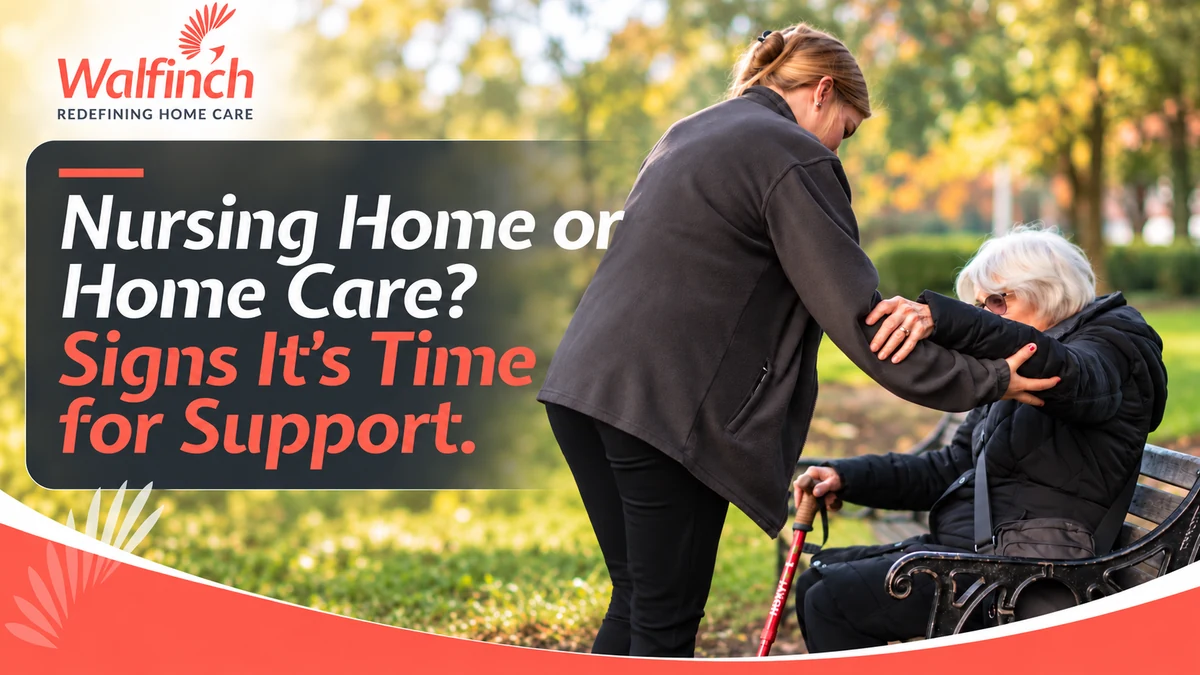
A nursing home is for people who need a qualified nurse there day and night. If it's more about help with washing, dressing, meals, tablets or a bit of company, home care is often a better fit.
It usually starts with something small. Mum's lost some weight. Dad fell in the kitchen and didn't tell anyone for a week. Then a nurse on the ward, or a neighbour, says the words "nursing home" and everyone goes quiet.
We get a lot of calls like this. Often, older people across Newcastle and North Tyneside can get the help they need without leaving the house they've lived in for years.
Is a nursing home the same as a senior home?
Not quite. A nursing home has registered nurses on shift 24 hours a day. A residential care home helps with personal care and meals, without the nursing. "Senior home" usually means one or the other too.
Home care, sometimes called domiciliary care, is the other way round. Nobody has to move. A carer comes to your relative's own front door, at times that suit them.
The signs we'd look out for
It's rarely one big moment. More often it's little things, like:
- Food in the fridge that's well past its date
- The same clothes a few days running
- Tuesday's tablets still in the blister pack on Friday
- Letters and bills piling up unopened
- A fall, or a "near miss" they laugh off
- Not getting out like they used to
- You popping round every day and feeling shattered
One on its own might be nothing. Three or four, and it's probably time to get some home care in. Not sure what they need? Ask the council for a free needs assessment.
Does needing more help mean a nursing home?
Not always. Most of what families worry about, like washing, meals, medication and getting safely to bed, is what home care is for. For health needs, district nurses can call in while our carers look after the day-to-day.
And if things change later on, we'll talk it through with you and their GP.
What about the cost of a live-in companion or live-in nurse?
Some families start by looking for a live-in companion. It sounds simple, but a live-in companion means giving up a spare room and having someone in the house day and night, which many older people don't want.
Others search for live-in nurse cost because they think it's that or a nursing home. A live-in nurse is one of the most expensive care options. For comparison, Which? reported the average nursing home fee in England at £1,372 a week in 2024-25.
Before you go down the live-in companion route or start comparing live-in nurse costs, think about when help is actually needed. For most people it's a few points in the day: getting up, lunch, a cuppa and a chat, then bed. That's what our home care visits are built around, with night care if nights are unsettled.
What home care with us looks like
We'll come and meet your relative first, free, to find out how they like their day to go. Some people just want companionship a couple of times a week, a wander down the Fish Quay or a trip to one of our free Thrive Clubs. Our Tuesday class at The Exchange in North Shields is gentle exercise, it's free, and you don't need to book. Others need personal care each morning, medication support, or respite care so the family can have a proper break.
Each client has a small team of carers, so they get to know the faces at the door. We're rated Good by the Care Quality Commission and cover most of Tyneside and parts of Northumberland. Our guide to home care costs in Newcastle explains pricing.
Not sure yet? Give us a ring
If a nursing home or senior home has been mentioned and you're not convinced you need one, call us on 0191 429 2800 or fill in our Arrange Care form. We'll talk it through, no pressure.